J. L. BELL is a Massachusetts writer who specializes in (among other things) the start of the American Revolution in and around Boston. He is particularly interested in the experiences of children in 1765-75. He has published scholarly papers and popular articles for both children and adults. He was consultant for an episode of History Detectives, and contributed to a display at Minute Man National Historic Park.

Subscribe thru Follow.it


•••••••••••••••••


Showing posts with label Dr. Zabdiel Boylston. Show all posts

Tuesday, September 09, 2025

“Swelled to three times his size, black as bacon”

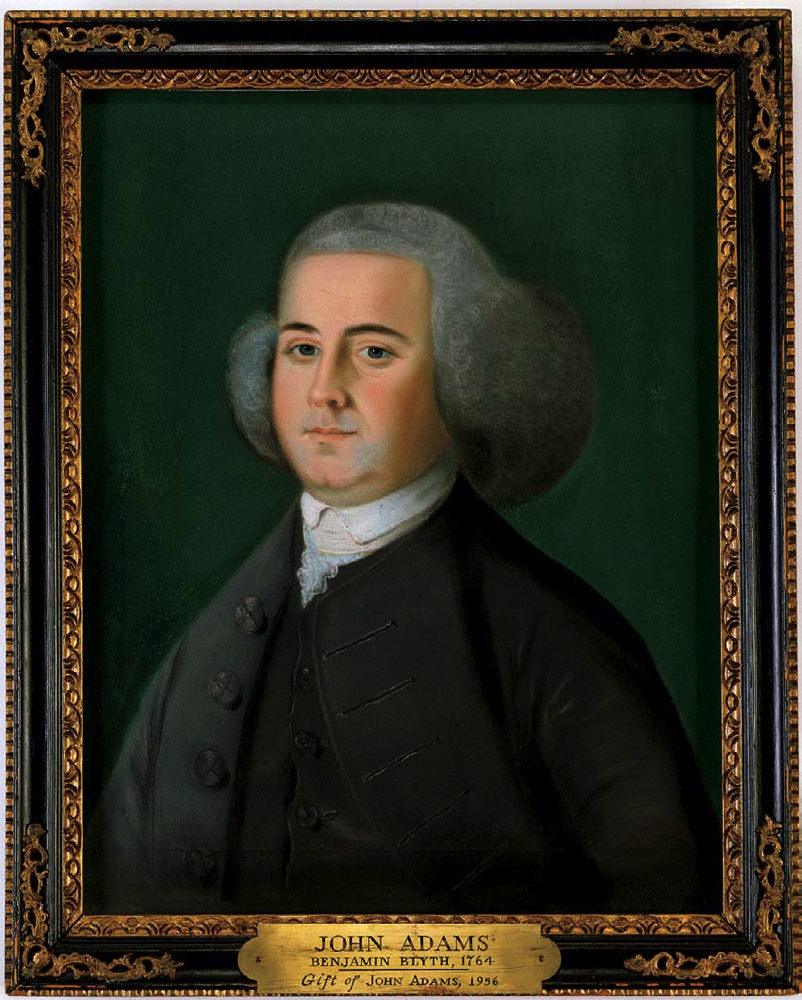
Here’s another account of anti-epidemic measures from the Adams family papers, this one a 17 Apr 1764 letter from John Adams to his fiancée, Abigail Smith.

John had gone into Boston to be inoculated with smallpox under the care of Dr. Nathaniel Perkins, and he reported:
Messrs. Quincy’s Samuel and Josiah, have the Distemper very lightly. I asked Dr. Perkins how they had it. The Dr. answerd in the style of the Faculty “Oh Lord sir; infinitely light!” It is extreamly pleasing, says he, wherever we go We see every Body passing thro this tremendous Distemper, in the lightest, easiest manner, conceivable.

The Dr. meaned, those who have the Distemper by Inoculation in the new Method, for those who have it in the natural Way, are Objects of as much Horror, as ever.

There is a poor Man, in this Neighbourhood, one Bass, now labouring with it, in the natural Way. He is in a good Way of Recovery, but is the most shocking sight, that can be seen. They say he is no more like a Man than he is like an Hog or an Horse—swelled to three times his size, black as bacon, blind as a stone. I had when I was first inoculated a great Curiosity to go and see him; but the Dr. said I had better not go out, and my Friends thought it would give me a disagreable Turn.

My Unkle [Dr. Zabdiel Boylston?] brought up one [John] Vinal who has just recoverd of it in the natural Way to see Us, and show Us. His face is torn all to Pieces, and is as rugged as Braintree Commons.

This Contrast is forever before the Eyes of the whole Town, Yet it is said there are 500 Persons, who continue to stand it out, in spight of Experience, the Expostulations of the Clergy, both in private and from the Desk, the unwearied Persuasions of the select Men, and the perpetual Clamour and astonishment of the People, and to expose themselves to this Distemper in the natural Way!—

Is Man a rational Creature think You?—Conscience, forsooth and scruples are the Cause.—I should think my self, a deliberate self Murderer, I mean that I incurred all the Guilt of deliberate self Murther, if I should only stay in this Town and run the Chance of having it in the natural Way.
Smallpox continued to spread well into the age of photography, so there’s graphic documentation of how victims look when the blisters break out. I don’t recommend it.

Friday, September 15, 2023

“Argumentive dialogue concerning inoculation”

The Telltale essays by Harvard College students in Ebenezer Turell’s notebook come to a stop on 1 Nov 1721.

In the preceding month, 411 people in Boston had died of smallpox. The epidemic had been spreading and killing since April.

People at Harvard were contracting the disease, including the maid of undergraduate Samuel Mather (1706–1785).

Samuel’s father, the Rev. Cotton Mather, had heard about inoculation against smallpox from his enslaved servant Onesimus and then from reading accounts of the procedure in Turkey. He urged Dr. Zabdiel Boylston to try this approach infecting people with a mild case of the disease in hopes of immunizing them for life.

In June 1721, Boylston inoculated his young son, an enslaved man, and that man’s son. When they didn’t die, he and Mather went public. Boston’s selectmen told him to stop. Boylston didn’t, inoculating young Samuel Mather among others.

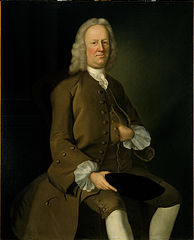
Dr. William Douglass opposed inoculation with his pen and his authority as a Scottish-educated physician. The Rev. Benjamin Colman (shown above) supported Boylston and Mather with his Narrative of the Method and Success of Inoculating the Small-pox in New England. Other doctors and ministers divided on the question.

In that atmosphere, around the start of November Ebenezer Turell opened his Telltale notebook from the other end and wrote out a fourteen-page “Argumentive dialogue concerning inoculation between Dr. Hurry and Mr. Waitfort.” Dr. Hurry was, of course, eager for the new procedure, and Mr. Waitfort was still hanging back.

The dialogue consisted of exchanges like this one:
W[aitfort:…] He that bring sickness upon himself Voluntarily Breaks one of the divine Commandment (the 6th)…

H[urry:] I never heard yt the Bringing Sickness upon our selves was a Breach of ye Divine Law Absolutly for by vomitting Purging letting of Blood &c We make our selves sick and that voluntarily too
In the end Dr. Hurry prevailed. The essay concluded with this verse:
Theres none but Cowards fear ye Launce,
Heroes receive ye Wound
With rapturous joy they Skip & Dance,
While others hugg ye Ground.
According to Dr. Boylston’s published account, on 23 November he “inoculated Mr. Ebenezer Pemberton, and Mr. John Lowel, each about 18.” Both those young men were in Turell’s college class and in his circle. (Indeed, I suspect this John Lowell was the student he started the Telltale with.)

The next day, he administered the procedure to a Harvard professor, a tutor, and seven students, including “Mr. Ebenezer Turil.”

Turell went back into his notebook and added that his “Argumentive dialogue” was “Compos’d about three weeks before I was inoculated.”

TOMORROW: Ebenezer Turell’s Society.

Saturday, April 25, 2020

“First instructed in it, by a Guramantee-Servant”

As described yesterday, the Rev. Dr. Cotton Mather tried to convert Onesimus, an enslaved young man he received in 1706, to his form of Christianity. But the man was more interested in marrying, having children, and earning his own money.

On 31 July 1716, the minister was reaching the end of his patience. He wrote in his diary:
My Servant Onesimus, proves wicked, and grows useless, Froward, Immorigerous. My Disposing of him, and my Supplying of my Family with a better Servant in his Room, requires much Caution, much Prayer, much Humiliation before the Lord. Repenting of what may have offended Him, in, the Case of my Servants, I would wait on Him, for his Mercy.
“Froward” meant “contrary.” “Immorigerous” meant “rude.” As for “Disposing of him,” the minister hadn’t yet made up his mind about what to do.

Remarkably, that same month Mather wrote to a correspondent in the Royal Society of London, describing Onesimus’s intelligence and knowledge of the seemingly radical practice of smallpox inoculation. That 12 July 1716 letter said:
Enquiring of my Negro-man Onesimus, who is a pretty Intelligent Fellow, Whether he ever had ye Small-Pox; he answered, both, Yes, and No; and then told me, that he had undergone an Operation, which had given him something of ye Small-Pox, and would forever praeserve him from it; adding, That it was often used among ye Guramantese, & whoever had ye Courage to use it, was forever free from ye Fear of ye Contagion. He described ye Operation to me, and shew’d me in his Arm ye Scar, which it had left upon him…
In 1713 and 1716 the Royal Society published two accounts of smallpox inoculation from European physicians who had traveled and worked in Turkey. Soon afterward, Lady Mary Wortley Montagu and her diplomat husband returned from Constantinople, and in London she also talked up this way of obtaining immunity from the virus.

In 1721, a smallpox epidemic broke out in Boston. Mather allied with a local physician named Zabdiel Boylston to try using inoculation locally. Since that treatment meant giving people the disease, though hopefully a mild case, it prompted a lot of opposition from people who thought the point of medicine was to produce fewer sick people, not more. Opponents included the European-educated Dr. William Douglass and the printer of the newspaper Douglass helped to fund, James Franklin.

Boylston published a pamphlet drawing on the Royal Society publications and adding more arguments, some from Mather. The minister cited what he had learned from Africans. Of course, opponents of inoculation used that source to ridicule the idea.

The argument became so heated that someone threw an incendiary bomb at Mather’s house. But eventually Boylston was able to inoculate enough people to make a scientific case that the new treatment saved lives. It became a standard regimen for the rest of the century, though communities still worried about careless doctors not keeping their infectious patients isolated from the public.

Mather wrote about the controversy in his 1724 manuscript “The Angel of Bethesda,” which echoed that earlier pamphlet in how he described learning about inoculation:
There has been a Wonderful Practice lately used in Several Parts of the World, which indeed is not yett become common in o’r Nation.

I was first instructed in it, by a Guramantee-Servant of my own, long before I knew, that any Europaeans or Asiaticks had the least Acquaintance with it; and some years before I was enriched with the Communications of the learned Foreigners, whose Accounts I found agreeing with what I received of my Servant, when he shewed me the Scar of the Wound made for the Operation; and said, That no Person ever died of the Small-pox in their Countrey that had the Courage to use it.

I have since mett with a considerable Number of these Africans, who all agree in One Story; That in their Countrey grandy-many dy of the Small-Pox: But now they learn This Way: People take Juice of Small-Pox, and Cutty-skin, and Putt in a Drop; then by’nd by a little Sicky, Sicky: then very few little things like Small-Pox, and no body dy of it; and no body have Small-Pox any more. Thus in Africa, where the Poor Creatures dy of the Small-Pox like Rotten Sheep, a Merciful GOD has taught them an Infallible Praeservative. Tis a common Practice, and is attended with a Constant Success.
This passage has been analyzed for Mather’s presentation of an African dialect and for the way he portrayed Africans as backward while also drawing on their medical knowledge.

Indeed, the whole 1720s argument over smallpox inoculation in Boston has attracted a lot of scholarship, and I haven’t tried to recount it all here. Among the most recent studies are Stephen Coss’s The Fever of 1721, Amalie M. Kass’s “Boston's Historic Smallpox Epidemic” in the Massachusetts Historical Review, and Margot Minardi’s “The Boston Inoculation Controversy of 1721-1722” in the William and Mary Quarterly.

By the time that controversy raged, the Rev. Cotton Mather had already disposed of his frustrating servant, and source of medical knowledge, Onesimus.

TOMORROW: What happened to Onesimus?

Sunday, June 26, 2016

Following the Money after the Phillips-Woodbridge Duel

As I prepared yesterday’s posting about the duel between Henry Phillips and Benjamin Woodbridge, I noticed there’s a considerable literature about it. Samuel G. Drake wrote about the event in 1856. The Massachusetts Historical Society heard a paper on the topic in 1861 and another in 1904. In 1874 the Overland Monthly published another telling titled “A Duel on Boston Common.” Brent Simons devoted a chapter to the incident in Witches, Rakes, and Rogues.

Why do we have so much information about this event? Both duelists were from the social elite, but they weren’t really important. As I said yesterday, Phillips had graduated from Harvard. At age thirteen, Woodbridge was one of the people whom Dr. Zabdiel Boylston inoculated against smallpox in the first year of that controversial treatment. But neither young man did anything truly noteworthy before their duel.

The duel itself was unusual because it was reportedly the first in colonial America to end in death, and because colonial Massachusetts society reacted so strongly to it. “The town is amazed!” wrote Judge Samuel Sewall in his diary. Acting governor William Dummer issued a reward for Phillips’s capture; the Massachusetts Historical Society offers a look at that proclamation.

In addition to the new law I mentioned yesterday, there was also an angry sermon from the Rev. Joseph Sewall, the judge’s son, published with a preface by all the town’s clergymen. (The Sewalls had a personal connection to the case; Woodbridge’s business partner was Jonathan Sewall, the judge’s nephew and minister’s first cousin.) But the newspapers, legal documents, and sermons don’t tell us much about the duel itself.

Instead, those details come from the unusually large amount of testimony about the event that was collected and preserved, and those documents were created for a very powerful reason—there was money involved.

Not in the duel itself. The two young men had apparently quarreled over a gambling debt, but ultimately they dueled because their sense of honor exceeded their sense. The big money was the nearly £4,000 in real estate that Henry Phillips owned.

After fleeing to France, Phillips ended up dying in less than a year. Moralists of the time attributed his death to guilt for killing Woodbridge. Today we might wonder about the effect of depression or stress—i.e., a different way of linking the two deaths. Of course, there’s always the possibility Phillips died of a virus or congenital condition that didn’t care about the duel at all.

Whatever way he died, Phillips left no will. Under British common law, his property would go mostly to his older brother, Gillam Phillips (shown above). In contrast, Massachusetts law divided the estate in five among the deceased’s brother, mother, and three sisters (or their children).

Gillam sued, seeking to take a considerable sum from his female relatives (or their husbands). Losing in the Massachusetts courts, he appealed to London. It was apparently as part of that transatlantic lawsuit that Gillam Phillips gathered several depositions from witnesses to the men’s quarrel and the discovery of Woodbridge’s body.

Ten years after the duel, Gillam Phillips finally lost that case. The Privy Council ruled that Massachusetts law applied. In The Transatlantic Constitution, Mary Sarah Bilder of Boston College Law School wrote that that was an important precedent in establishing that colonial law could sometimes differ from British law. Gillam Phillips’s collection of documents eventually came to the Harvard Law School archives, becoming the source material for a no-doubt endless stream of articles about his brother’s fatal duel on Boston Common.

Monday, November 17, 2014

Inoculation Lecture in Weymouth, 19 Nov.

On Wednesday, 19 November, the Abigail Adams Historical Society in Weymouth will present a program on “The History of Inoculation and Vaccination: The Experience of the Adams Family and the Modern Perspective.”

David Jones, M.D., Ph.D., the A. Bernard Ackerman Professor of the Culture of Medicine at Harvard University and Harvard Medical School, will provide a historical perspective on smallpox inoculation, highlighting the experiences of the Adams family.

John Adams’s mother was a Boylston, niece of the doctor who had done the first inoculations in Boston decades before, Zabdiel Boylston. His work as a lawyer riding the circuit exposed him to lots of people, especially in busy Massachusetts ports. So he underwent the treatment during Boston’s epidemic of 1764, shortly before his marriage.

Abigail Adams and the children didn’t risk the treatment (not nearly as safe as later-developed vaccination) until 1776, when there was another epidemic after the siege. Contrary to how H.B.O.’s John Adams miniseries showed the process, Abigail took her four children, her household servants, and some other relatives and neighbors into Boston. Like John, she underwent inoculation at a house temporarily turned into a hospital, not at home.

Dr. Jones will speak in the Snell Conference Room of South Shore Hospital, 55 Fogg Road in Weymouth, from 7:00 to 9:00 P.M. This program is free and open to the public.

Thursday, January 03, 2013

Reviewing the Review

The Massachusetts Historical Review is the Massachusetts Historical Society’s annual journal. It usually contains about four scholarly papers and some book reviews. Copies go to members and subscribers, and people with access to J-STOR can see the articles individually.

Volume 14, published at the end of last year, has three articles on eighteenth-century New England history, which made it particularly interesting for me. (Some issues focus on the U.S. Civil War, industrialization, and other minor topics.) There’s also a review by Chernoh M. Sesay of both Vincent Carretta’s biography Phillis Wheatley (discussed back here) and the essay collection Venture Smith and the Business of Slavery and Freedom.

The issue’s first paper is “Boston’s Historic Smallpox Epidemic,” by Amalie M. Kass. It recounts the dispute over the new smallpox inoculation in 1721-22. The Rev. Cotton Mather and Dr. Zabdiel Boylston favored the new technique. Dr. William Douglass and the young printer James Franklin were the loudest voices against it. In the end, the numbers showed its value—one of the earliest uses of epidemiological statistics to settle a scientific question.

There have been many studies of that event over the years because the principal figures helpfully wrote a lot about it. This webpage from Harvard offers links to their original back-and-forth pamphlets and a bibliography of later studies. Here’s a PDF download of one more article from John Hopkins, another from Illinois Wesleyan, and a recent undergraduate thesis at William & Mary.

I found Kass’s article to be a solid and thorough narration of events without many surprises. One thing that did intrigue me was that Mather had stumbled onto the germ theory of disease:
The Animals that are much more than Thousands of times Less than the finest Grain of Sand, have their Motions; and so, their Muscles, their Tendons, their Fibres, their Blood, and the Eggs wherein their Propagation is carried on. The Eggs of these Insects (and why not the living Insects too!) may insinuate themselves by the Air, and with our Ailments, yea, thro’ the Pores of our skin; and soon gett into the Juices of our Bodies.
The minister’s microscopes weren’t good enough to really see germs, much less the smallpox virus, and this passage from his book The Angel of Bethesda wasn’t published until the 20th century. So he was very lucky to hit on the right idea without strong evidence and quite unlucky not to be able to publish his work and get credit for it.

The next paper is Douglas L. Winiarski’s “The Newbury Prayer Bill Hoax: Devotion and Deception in New England’s Era of Great Awakenings.” Winiarski is writing a study of changing New England Congregationalism in the 1700s, to be titled Darkness Falls on the Land of Light. As I reconstruct events, that research included cataloguing “prayer bills,” or short handwritten notes seeking prayer that congregants handed to ministers or left at meetinghouses to be read during services. And that led Winiarski to one such prayer bill, preserved at the Historical Society of Old Newbury and published in Joshua Coffin’s 1845 local history (with modernized spelling and capitalization).

That handwritten document purports to be a prayer by the Rev. Christopher Toppan of Newbury himself, worried about the devil causing his horse to throw him. Winiarski examines it against scores of other prayer bills, finding it unusually long and detailed, as well as oddly spelled and not from Toppan’s own hand. (It’s also inconsistent in its use of the long S, a detail not noted in the paper.)

Winiarski describes the furor of what was later called the “First Great Awakening,” in which Toppan first welcomed and then opposed the preaching of the Rev. George Whitefield. The paper concludes that this document was written and posted to lampoon Toppan and not, as first published, a sincere (if “deranged”) prayer by him. There’s no clue pointing to the real culprit, however. The great value of Winiarski’s paper is its look at New England religious practices in the 1740s. That one curious document can be a peephole into the New Light/Old Light debate.

TOMORROW: A study of one runaway slave, or many.

Saturday, October 01, 2011

“Several of the founding fathers were champions of inoculation”

In The Nation, Lindsay Beyerstein took on Rep. Michele Bachmann’s recent incendiary comments about vaccinations from a historical perspective:
As a Tea Party conservative, Bachmann styles herself as defender of original vision of the founding fathers for America. Ironically, several of the founding fathers were champions of inoculation against infectious disease. Some even played key roles in ushering in the vaccine age.

If it hadn’t been for mandatory smallpox inoculation, the Republic might never have survived. General George Washington ordered the Continental Army inoculated against smallpox in 1777, the first large scale inoculation of an army in history. Washington was supported in this effort by Dr. Benjamin Rush, a signatory to the Declaration of Independence and the chair of the Continental Congress’ Medical Department.

Inoculation was a precursor to vaccination which induced a milder case of smallpox by scratching the skin and rubbing in pus from a smallpox lesion. Cleric and amateur scientist Cotton Mather provided a dramatic proof of concept for inoculation when he inoculated 287 people during a smallpox epidemic in Boston in 1721. Only six of the inoculated individuals died, a much lower death rate than for natural smallpox. Mather gets credit for introducing smallpox inoculation to North America, but he learned about it from Onesimus, a slave who had undergone inoculation in Africa.

Despite the success of his experiment, Mather was widely vilified for mocking the will of God. At the time, many believed that smallpox was a divine punishment for sins and that trying to evade the consequences of sinning by getting inoculated was a sin in itself. That argument sounds ridiculous to modern ears, but that same logic still prevails in some quarters when discussing sexually transmitted diseases.

Someone threw a small bomb through Mather’s window with a note that said, roughly, “Inoculate this, Mather.”
The article goes on to name-check Alexander Hamilton, Thomas Jefferson, and Harvard professor Dr. Benjamin Waterhouse.

Not mentioned in the article is how in 1721 James Franklin published essays criticizing Mather (shown above) and Dr. Zabdiel Boylston for their inoculation campaign in his New England Courant newspaper and in pamphlets. Among the apprentices who helped to create those publications was the printer’s little brother Benjamin.

Eventually, however, Benjamin Franklin accepted the scientific evidence for the value of smallpox inoculation, particularly after his young son died of the disease in 1736. Two decades later, Franklin and Dr. William Heberden of London published a pamphlet on inoculation in England and America. Franklin had a very important quality for a political leader, or anyone else: the willingness to change one’s mind after seeing solid evidence that undermines one’s initial beliefs.